
On August 14, 2026, Mexico published the final antidumping resolution on ammonium sulfate originating in China, with a definitive duty of 0.1488 dollars per kilogram in force since August 15. For most sourcing teams that reads as a fertilizer story and stops there. It is not. It is the clearest statement so far of what country of origin verification is going to cost buyers who import from Asia, because the charge follows where the goods were made, not the country the invoice or the shipment comes from.
The wording is what matters. The duty applies to goods entering under tariff line 3102.21.01 of the TIGIE with NICO 00 and under any other line, drafted that way to block evasion through tariff reclassification. And the importer is released from paying only by proving that the country of origin is other than China. Dumping margins in the case ran between 34% and 63%, according to the trade firm Stratego.
Read those two conditions together and the question stops being a customs formality at destination. It becomes a question about the factory: who made this, and can you show it.
What the August resolution actually says
The case did not appear overnight. The antidumping investigation opened in February 2025 and closed eighteen months later with a definitive duty lower than the provisional one: 0.1488 dollars per kilogram against the 0.1807 dollars per kilogram set in November 2025, on a determined price discrimination margin of 0.1849 dollars per kilogram. The investigated imports represented 74% of total imports of the product, as reported by Tiempo.
Two operational details matter more than the rate itself. First, the resolution was written to survive reclassification: it names one fraction and then extends the charge to any other fraction the goods might enter under. Second, it places the escape hatch and the burden of proof in the same sentence. You do not pay if you prove the origin is not China.
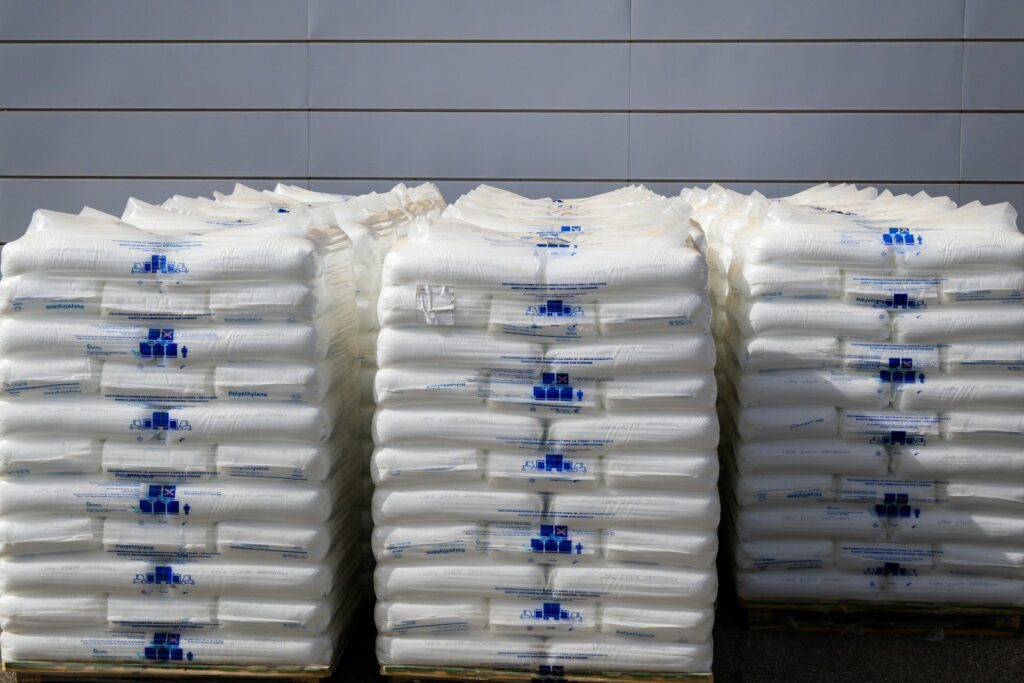
Why is country of origin verification now the importer’s burden?
Origin and country of shipment are not the same thing, and this resolution is built on that distinction. A supplier can invoice from one jurisdiction, consolidate in a second and present a clean set of shipping documents while the goods were produced in a plant in mainland China. Under this text, the duty still applies, and it is the importer, not the seller, who has to demonstrate otherwise.
The political framing confirms this is not a temporary irritation. President Claudia Sheinbaum said the measure is not retaliation, and that the Economy Ministry is in communication with its Chinese counterparts through the Chinese embassy in Mexico as well as with domestic producers, in remarks published by El Financiero on August 17. A duty that comes out of a technical antidumping procedure is not going to be lifted by diplomacy, so the sensible assumption is that you operate with it in place.
Origin traceability has also become an argument at state level. On August 21, Marcelo Ebrard said Mexico has not methodologically identified any transshipment from its territory exceeding 1% of its total foreign trade, and that it intends to prove it. He added that the United States imports 3.8 times more from China than Mexico does, and that transshipment should not be confused with plain importing, according to Infobae. If the federal government is being pushed to document origin upward, the pressure to document it downward, supplier by supplier, is not going to ease.
The volumes are moving the other way
The intuitive reaction is to assume buyers are already leaving, and that country of origin verification will matter less as volumes shift elsewhere. The numbers say the opposite. Mexican fertilizer imports from China rose 41.8% in the first half of 2026, from 292,000 metric tons in the same period of 2025 to 414,000 tons, while consumption of imported chemical fertilizer contracted 5.73%, from 2,179,785 to 2,054,806 tons. The value of the purchases grew 24.3% year on year, and China closed the half as the second largest origin behind Russia, whose shipments fell from 1,005,000 to 785,000 tons, per La Jornada.
The pattern is not exclusive to fertilizer. QIMA’s Q3 2026 barometer, published on July 13 and built on its own second quarter product inspection and supplier audit data, found that China concentrated 81% of inspection demand in South America and Latin America and 78% in emerging markets outside Asia. Nearshoring and reshoring accounted for 11% of service volumes among European Union clients and 7% in North America, both below the 2025 average. The exit from China that fills strategy decks is not showing up in the inspection data.
The realistic position for a buyer is not China or somewhere else: it is more volume from China, carrying more regulatory exposure and more country of origin verification work than a year ago.
Why is the 2026 tariff matrix still open?
Anyone rebuilding a sourcing map this quarter should assume the rules keep moving. Mexico is evaluating new restrictions on Chinese products and on countries without a trade agreement, with steel and aluminium among the candidates to go up. The package in force covers around 1,500 product categories with a maximum tariff of 50%, and Chinese imports fell close to 33% in the first five months of 2026 against the same period of 2025, with reductions above 40% in light vehicles, auto parts and footwear. The Economy Ministry stated that there is currently no concrete plan or proposal to implement new tariff adjustments, while acknowledging that it maintains consultations with business, El Financiero reported on August 18.
The friction runs in both directions: China’s earlier tariffs on pecans reached 51.6% on the Mexican product and 54.3% on the American one. Treating the January tariff schedule as the final word for the year is a bet against the evidence, and it is why country of origin verification has to be a standing process rather than a one-off check.

What country of origin verification looks like at the plant
If the burden of proof sits with the buyer, the country of origin verification that counts happens before the purchase order, not at the customs desk. Three questions cover most of the exposure.
Is your counterpart the manufacturer
A trading company can be a legitimate partner, and many are. What a trading company cannot do is answer where your goods were made unless it tells you which plant it buys from. If that question has never been answered in writing for a given line, your country of origin verification has not started. You know your invoicing party.
Where does production physically happen
A supplier with several plants may run your order in the one you have never seen, and a supplier with one plant may subcontract the process step that defines origin. That is not verifiable by email. It is verified by someone standing in the building, checking the line, the ownership and the subcontracting arrangement.
Does the quality record support the origin story
Verification and quality control are the same visit. QIMA’s data is a reminder of why: 26% of electronics products from emerging markets came out of specification, against 8% in developed markets. A supplier that cannot document its own production chain rarely documents its own defect rate either.
This is the work BiiLinx does on the sourcing side: identifying and filtering certified manufacturers, developing and customising product, negotiating, running quality control and safeguarding payments. It is done from our own offices and team in Shenzhen, which is the practical difference between a consultant who forwards emails and someone who can walk into the factory.
Where should country of origin verification start before the next purchase order?
Four things are worth doing this month.
- List your China exposed SKUs by origin of manufacture, not by invoicing party or port of loading. If the two lists differ, the gap is your risk.
- For every active supplier, record whether it is the manufacturer and, if it is not, which plant produces your line. Make it a field in your supplier master, not a memory.
- Have your customs broker read the complete published resolution for any line you import under. This one reaches beyond its own fraction by design, and only the full text tells you what is expected.
- Treat the tariff schedule as a variable in landed cost, with a review date, rather than a constant you set once a year.
Frequently asked questions
What duty did Mexico impose on ammonium sulfate from China?
The final antidumping resolution published on August 14, 2026 sets a definitive duty of 0.1488 dollars per kilogram, in force since August 15. It is lower than the provisional duty of 0.1807 dollars per kilogram set in November 2025, and dumping margins in the case ran between 34% and 63%.
How can an importer avoid the duty through country of origin verification?
The importer is released from paying only by proving that the country of origin is other than China. The duty applies under tariff line 3102.21.01 and under any other line, drafted that way to block evasion through reclassification, so the burden of proof sits with the importer, not the seller.
How much did Mexican fertilizer imports from China grow in 2026?
They rose 41.8% in the first half of 2026, from 292,000 to 414,000 metric tons, while consumption of imported chemical fertilizer contracted 5.73%, per La Jornada. China closed the half as the second largest origin behind Russia, so the volumes are moving toward China, not away from it.
Why does country of origin verification start with knowing who the manufacturer is?
A trading company can be a legitimate partner, but it cannot answer where your goods were made unless it tells you which plant it buys from. If that question has never been answered in writing for a given line, country of origin verification has not started: you only know your invoicing party.
None of this is a reaction to a fertilizer duty: country of origin verification is now part of the cost of buying from Asia. It is what buying from Asia now requires; the resolution only put it in writing. If you need the factory side of that answered before your next order, talk to our team.