
Incoterms look like a formality at the end of a negotiation and they are the opposite: they are the line that defines where the supplier’s responsibility ends and the buyer’s begins. Two quotes with the same number and different terms are not comparable, and that confusion is what turns a “better” price into a more expensive one.
What do incoterms actually define?
Three things, according to the International Chamber of Commerce, worth separating because they do not always meet at the same point:
- Who pays for each leg, from inland transport at origin to customs clearance at destination.
- Where risk transfers, meaning from which point a loss or damage is the buyer’s problem.
- Who handles the paperwork for export and import.
What they do not define is ownership of the goods or the payment terms. Those belong to the contract, and mixing them up is a common mistake.
The four incoterms actually used with China
The official list is long and in practice almost everything is settled with four.
EXW. The supplier makes the goods available at its plant and does nothing else. It is the lowest price a buyer will see and also the one that leaves out the most: loading, inland transport, export clearance and everything after. Only worth it if someone at origin handles it.
FOB. The supplier delivers on board at the port of departure, with export cleared. It is the one that compares best: the buyer books the freight, so the buyer sees what it costs.
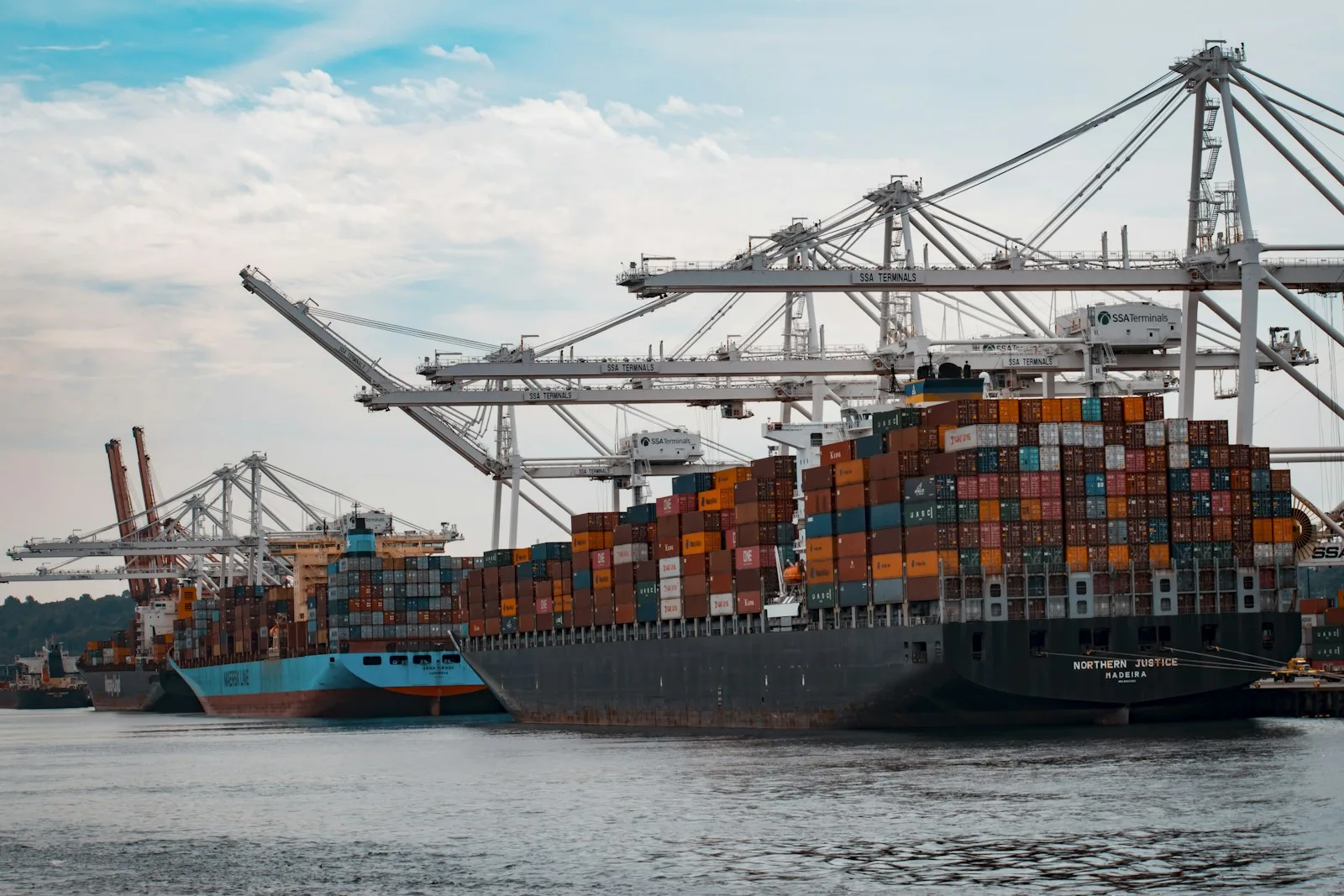
CIF and CFR. The supplier pays the freight to the destination port, and under CIF a minimum insurance as well, according to the ICC’s Incoterms 2020 rules. It sounds convenient and carries a well-known catch: the buyer loses control over which carrier, which transit time and which surcharges get booked, and destination costs turn up at the end.
DAP and DDP. The cargo arrives at an address at destination. Under DDP the seller also takes on import duties, which sounds ideal and needs a clarification that is almost never made.
Why do incoterms change the price you are comparing?
An EXW quote and a CIF quote for the same product can differ a great deal without either being more expensive: what changes is how much is included. Comparing the number without looking at the term is comparing a product against a product plus services.
And there is a part that appears in neither: destination charges. Unloading, terminal, storage, clearance and delivery to the door get paid either way, and under a CIF quote they arrive later, once the container is already at the port.
The way to compare properly is to bring everything to the same point: total landed cost at the warehouse door. With that, the term stops being a hidden variable.
Three mistakes that keep repeating
- EXW with a supplier that cannot export. Of the four incoterms above this is the one that fails hardest. Not every factory holds its own export licence. If it does not and the buyer has no agent at origin, the cargo stays in the plant.
- DDP without defining the importer of record. Someone has to appear as the importer before destination customs, and that carries tax consequences. A DDP where that point is not written down is a problem waiting.
- Assuming CIF insurance is enough. The minimum cover under CIF is narrow. If the cargo is worth something, insurance is arranged separately and at the right level.
How do you pick the term for each case?
There is no best one: there is one that fits each situation.
Among the usable incoterms, a buyer new to the lane with nobody at origin is better served by a term where the supplier reaches the port. A buyer with its own operator gets control of the freight and of the comparison back with FOB. And consolidating cargo from several suppliers is only possible under EXW or FOB with an agent in China.
One criterion orders this more than the term itself: who is better placed to negotiate each leg. Ocean freight is bought better by whoever moves volume; inland transport in China is bought better by whoever is in China.
What to put in writing
The term alone is not enough: the place has to be named. “FOB” says nothing; “FOB Shenzhen” does. It is also worth stating which edition of the rules applies, because the International Chamber of Commerce revises them about once a decade and some terms have changed meaning between editions.
With that, incoterms stop being an acronym at the bottom of an email and become what they are: who does what, written down before there is a container in the middle.
Frequently asked questions
What do incoterms not define?
Ownership of the goods and the payment terms. Incoterms define who pays for each leg, where risk transfers and who handles the export and import paperwork. Ownership and payment belong to the contract, and mixing them up with the term is a common mistake.
Which term makes quotes easiest to compare when buying from China?
FOB. The supplier delivers on board at the port of departure, with export cleared, and the buyer books the freight, so the buyer sees what it costs. That is why it is the term that makes quotes from different suppliers easiest to compare.
Is the insurance included under CIF enough?
Not always. Under CIF the supplier pays the freight to the destination port plus a minimum insurance, and that cover is narrow. If the cargo is worth something, insurance is arranged separately and at the right level. CIF also costs the buyer control over carrier, transit time and surcharges, and destination costs turn up at the end.
What should be put in writing besides the term?
The place has to be named, because “FOB” says nothing and “FOB Shenzhen” does. It is also worth stating which edition of the rules applies, because the International Chamber of Commerce revises them about once a decade and some terms have changed meaning between editions. The term alone is not enough.